Opening the dishwasher door only to be hit by a foul odor is never pleasant. A stinky dishwasher often signals that something’s gone wrong inside, but the good news is that fixing it doesn’t require calling in a pro or replacing the unit. Most dishwasher odor problems stem from trapped food particles, mold growth, or buildup in hard-to-reach spots. The smelly dishwasher issue is surprisingly common, yet many homeowners don’t realize how fixable it truly is. This guide walks you through identifying why your dishwasher smells bad, how to deep clean it, and the preventive steps that keep odors from returning. You’ll tackle this project with just basic household items and a little elbow grease.
Table of Contents
ToggleKey Takeaways
- A dishwasher that smells bad is typically caused by trapped food debris or mold growth, both of which are preventable and treatable with household items.
- Clean your dishwasher drain first using white vinegar and baking soda—this chemical reaction dislodges debris and eliminates odor-causing bacteria in one hot-water cycle.
- Deep clean the interior by running a vinegar cycle on the top rack followed by a baking soda cycle to neutralize remaining odors and disinfect all surfaces.
- Prevent dishwasher odors from returning by rinsing dishes beforehand, leaving the door slightly ajar between cycles, and running a monthly maintenance vinegar cycle.
- Regular filter maintenance and prompt unloading of dishes after each cycle significantly reduce the conditions that cause your dishwasher to smell bad.
Common Causes of Dishwasher Odors
Before you fix the problem, it helps to understand what’s creating that smell. A smelly dishwasher typically results from one of two culprits: food debris or microbial growth. Both are preventable and treatable, but they require different approaches.
Food Debris and Buildup
Food particles are the number-one reason dishwashers stink. Over time, scraps accumulate in the drain, around the spray arm, and inside the filter basket. When food sits there, especially in a warm, moist environment, it ferments and creates a rotten, sulfurous odor. This happens faster than most people think, sometimes within just a few weeks if the dishwasher runs frequently. If you’ve noticed your dishwasher smells increasingly bad after every cycle, blocked food debris is likely the culprit. The spray arm holes can also clog with tiny particles, restricting water flow and trapping more food inside.
Mold and Mildew Growth
The warm, damp interior of a dishwasher is paradise for mold and mildew. These fungi thrive in the rubber gasket around the door, on the interior walls, and inside the filter. Mold doesn’t just smell, it can also transfer odors to your dishes and glasses. If your dishwasher stinks but you don’t see obvious food buildup, mold growth is a strong possibility. People who run their dishwashers less frequently, or who leave the door closed between cycles (trapping moisture), tend to see more mold growth. The smell from mold is different from fermented food: it’s musty, earthy, and often described as that “old basement” scent.
How to Clean Your Dishwasher Drain
The drain is ground zero for dishwasher odors. Start here, because clearing trapped food and buildup will often solve half your problem.
What you’ll need:
- White vinegar (at least 1 cup)
- Baking soda (½ cup)
- A wire or plastic pipe brush
- Flashlight or your phone’s light
- Rubber gloves
- A small cup (heat-safe)
Steps:
-
Remove the bottom rack so you can access the drain and filter area. Look down with your flashlight to spot visible debris or blockages.
-
Pull out the filter basket (usually a cylindrical strainer at the bottom center). If it twists, turn counterclockwise. Rinse it under hot water and scrub with a brush to remove food and slime buildup.
-
Clear large debris by hand using a flashlight to guide you. Wear gloves and fish out any visible food, hair, or buildup. Don’t force anything: you’re looking for loose material.
-
Pour vinegar down the drain. Use about 1 cup of white vinegar poured directly into the drain opening. Vinegar naturally breaks down grease, mold, and odor-causing residue. Let it sit for 15–20 minutes.
-
Sprinkle baking soda (roughly ½ cup) down the drain. The chemical reaction between vinegar and baking soda will fizz and bubble, which helps dislodge trapped debris. This is the same trick that works for cleaning smelly drains throughout your home, methods to clean and deodorize drains are well-documented by professionals who test household techniques, and the baking soda and vinegar combination consistently tops the list.
-
Run a hot-water cycle without any dishes or detergent. This flushes out the loosened gunk and helps eliminate odor-causing bacteria. Your dishwasher should smell noticeably better immediately after.
Deep Clean the Interior and Filters
Once the drain is clear, tackle mold, mildew, and residual odors by deep cleaning the interior and hidden components.
What you’ll need:
- White vinegar (another cup)
- Baking soda (additional ½ cup)
- A tall, dishwasher-safe cup or bowl
- Soft-bristle brush or old toothbrush
- Rubber gloves
Steps:
-
Inspect and clean the rubber gasket around the door. This seal is a magnet for mold growth. Dampen a cloth with vinegar and wipe thoroughly around the gasket, paying attention to any visible black spots or buildup. If mold is stubborn, make a paste of baking soda and water, apply it to the moldy areas, and let sit for 10 minutes before scrubbing gently. Avoid aggressive scrubbing, as you can tear the gasket.
-
Check the spray arm. Pull it free (usually by twisting or unclipping from below), and rinse it under hot water. If the holes are clogged, use a thin wire or toothpick to clear each one carefully. Mineral deposits or food particles block water flow, which contributes to why your dishwasher stinks.
-
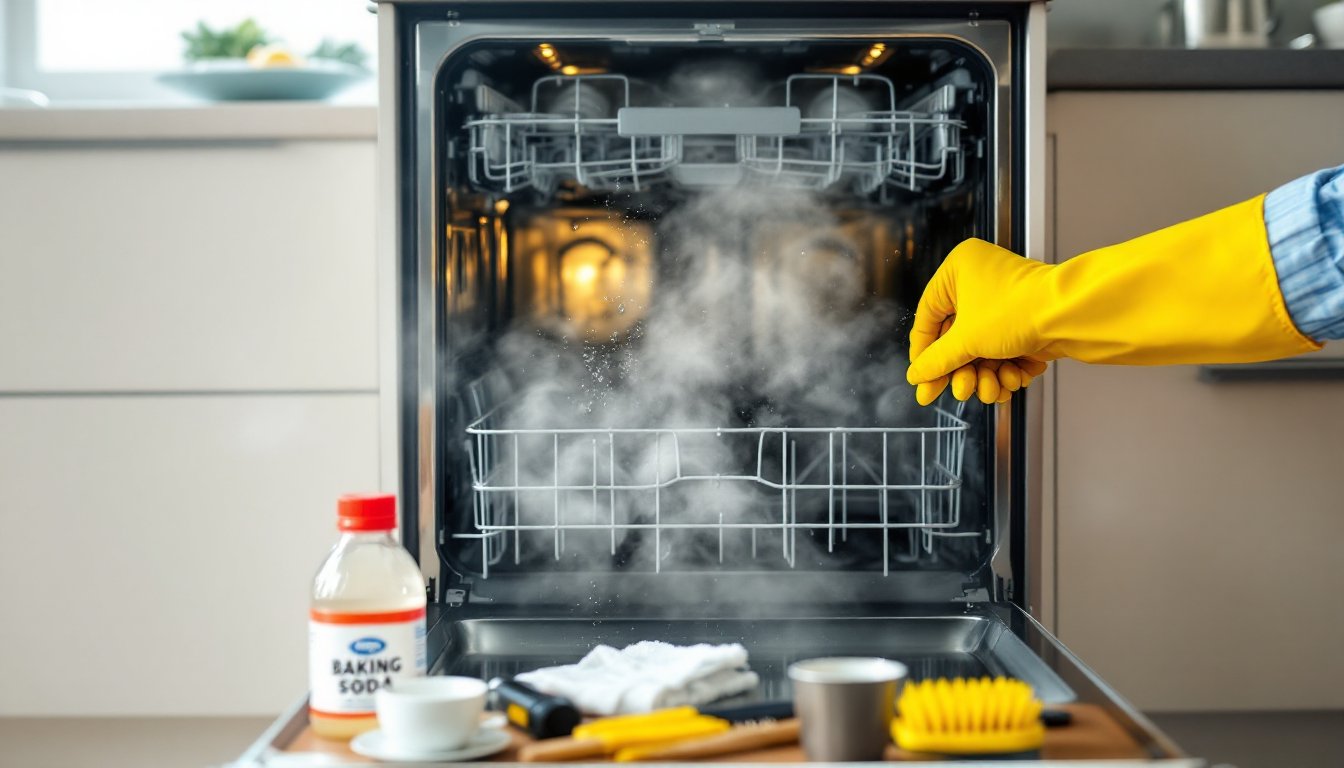
Place a cup of vinegar on the top rack. Fill a tall, dishwasher-safe cup with white vinegar and place it upright on the top rack (not in a cup holder, so it spills during the cycle). Run a hot-water cycle with no dishes. The vinegar will circulate throughout the machine, disinfecting surfaces and neutralizing odors.
-
Run a baking soda cycle. After the vinegar cycle, sprinkle about ½ cup of baking soda on the bottom of the empty dishwasher and run another hot-water cycle. This acts as a deodorizer and removes any lingering acid smell from the vinegar. When both cycles are done, your dishwasher interior should be significantly fresher.
Preventive Maintenance Tips
Preventing dishwasher odors is far easier than fixing them. A few small habits will keep your machine smelling clean and running efficiently.
Rinse and scrape dishes before loading. Remove large food particles and excess grease before placing plates in the rack. You don’t need a perfect rinse, but visible chunks should go in the trash. This alone cuts buildup significantly and prevents why your dishwasher smell returns quickly.
Leave the door ajar between cycles. After the cycle finishes, crack open the door slightly for at least 30 minutes to allow moisture to escape. A closed, damp interior is an incubator for mold and mildew. If you have kids or pets, use the door latch to keep it slightly open safely, or set a reminder to open it manually.
Run a maintenance cycle monthly. Even with good habits, a monthly cleaning keeps your dishwasher fresh. Fill a cup with vinegar, place it on the top rack, and run an empty hot-water cycle. This prevents odors from building up and keeps the drain clear. For homes with heavy dishwasher use, consider doing this every two to three weeks.
Check the filter regularly. Some dishwashers have self-cleaning filters, while others require manual inspection. Pull out the filter basket monthly, rinse it thoroughly under hot water, and look for trapped food or slime. A clean filter prevents odor-causing bacterial growth. Trusted reviews from major home publications consistently emphasize filter maintenance as a top preventive measure.
Don’t let dishes sit in the dishwasher. Once a cycle finishes, unload promptly. Wet, warm dishes sitting in a closed machine create an ideal breeding ground for odor-causing bacteria. Unload within an hour of the cycle ending if possible.
Use the heat-dry setting. The hot-air drying cycle helps evaporate residual moisture, which discourages mold growth. If your dishwasher has a heated dry option, use it especially in humid climates or seasons. This single habit can significantly reduce stinky dishwasher problems in many homes.
Conclusion
A dishwasher that smells bad is frustrating, but it’s rarely a sign of a broken machine. With a thorough drain cleaning, interior deep clean, and consistent preventive habits, you can eliminate odors and keep your dishwasher fresh indefinitely. The key is catching the problem early and staying on top of monthly maintenance. If after following these steps your dishwasher still smells, consult the manufacturer’s manual or contact a technician, occasionally, a faulty drain pump or hidden seal issue requires professional attention. For most households, though, vinegar, baking soda, and a little elbow grease solve the problem completely.